Skip to content
  • What We Do
    • Mental Health
    • Psychiatry
    • CrisisNow
    • Digital Self-Care
    • Peer Community
    • Medical
    • Success Coaching
    • Health Coaching
    • Basic Needs Support
    • Care Navigation
    • Faculty & Staff Guidance Line
  • Who We Serve
    • Private Colleges & Universities
    • Public Colleges & Universities
    • University Systems
    • Community Colleges
    • HBCUs
    • Online Populations
    • Faculty & Staff
    • K-12
  • About Us
    • People
    • For Providers
    • Our Care Network
    • Testimonials
    • News & Media
    • Careers
  • Resources
    • Blog
    • Webinars
  • Support
Menu
  • What We Do
    • Mental Health
    • Psychiatry
    • CrisisNow
    • Digital Self-Care
    • Peer Community
    • Medical
    • Success Coaching
    • Health Coaching
    • Basic Needs Support
    • Care Navigation
    • Faculty & Staff Guidance Line
  • Who We Serve
    • Private Colleges & Universities
    • Public Colleges & Universities
    • University Systems
    • Community Colleges
    • HBCUs
    • Online Populations
    • Faculty & Staff
    • K-12
  • About Us
    • People
    • For Providers
    • Our Care Network
    • Testimonials
    • News & Media
    • Careers
  • Resources
    • Blog
    • Webinars
  • Support
Search
Close this search box.

Supporting College Student Well-Being Through Telehealth

  • October 2, 2020
  • Chris Clark
Campus Well-being During a Continuing Crisis

Uncertainty continues to plague higher ed institutions, as the pandemic, a national reckoning over racial injustices and an economic recession impact campuses and student well-being across the country. It’s with these things in mind that The Chronicle of Higher Education hosted a virtual forum, with support from TimelyCare, featuring a panel of mental health experts from Paul Quinn College, Syracuse University, North Carolina State University and Loyola University New Orleans. These campuses represent a diverse set of student populations and span the gamut in their responses to COVID-19 this semester.

Watch the Virtual Forum

The forum’s timely discussion – occurring on the same day that Inside Higher Ed published a lengthy story about the expansion of teletherapy services in college counseling centers – focused on how these institutions approached student mental health under these unique and continually challenging circumstances.

The current impact on student mental health

NC State made headlines in August when it became one of the first institutions to pivot from in-person instruction to virtual learning, sending most students back home. When asked if there was a rise in demand for mental health services this semester, Dr. Monica Osburn, executive director of the North Carolina State University Counseling Center, noted that the campus was seeing demand come in sporadic waves. Mondays are a particularly high-demand day for counseling services, as students are often isolated and lonely after a weekend of not being able to engage in activities because of the pandemic’s impact.

Dr. Corey Wallack, executive director health and wellness at Syracuse University (where classes are occurring in-person and online), shared that social distancing requirements on campus are making it harder to connect in traditional ways. However, he said that because a majority of campus clinical services are virtual, that students are getting to know their mental health providers in a “more intimate way” because of the new counseling environment.

Sarah Brown, forum moderator and Chronicle senior reporter, asked if Loyola University New Orleans’ high touch approach had been impacted by this semester’s circumstances. Asia Wong, LCSW-BCAS, director of student affairs and student health services at Loyola, said that her campus is reaching out to students via multiple channels, not just student affairs. “Physical and mental health wellbeing require everyone’s input,” said Wong.

At Paul Quinn College, students are still getting used to the idea of mental health support because the mental health program was established less than five years ago, according to Mental Health Clinic Director Dr. Stacia’ Alexander. With all classes online this semester, many challenges arose that the college has had to overcome in reaching students. However, her message to students regarding mental health is simple: “This is the time you need to reach out to us. This is why we’re here,” said Dr. Alexander.

Breaking down barriers to wellness

Colleges and universities are getting creative this semester to reach students, keep them engaged and support their well-being. From virtual support groups and educational social media campaigns to socially distanced activities and on-campus safe spaces for counseling appointments, higher ed is thinking outside the box to care for students’ mental health. One critical piece for many campus counseling centers has been the integration of virtual care through telehealth, as Greta Anderson at Inside Higher Ed recently reported.

When the pandemic began in the spring, many institutions had to navigate complicated state licensure requirements as students left campus. It’s these licensure limitations that led Johns Hopkins University to partner with TimelyCare, according to Dr. Kevin Shollenberger, vice provost for student health and well-being.

“It helps us in reaching a broader group of students that we might not be reaching through our traditional counseling services,” Shollenberger told Inside Higher Ed. “We have been surveying students to get a sense of their experiences … I’ve been struck by the number of students who said that if we didn’t have TimelyCare in place, they wouldn’t have reached out.”

Paul Quinn College, which is also a TimelyCare campus, is actively reaching out to students in a variety of ways to make them aware of the available resources and support. “We reiterate with them to access services with TimelyCare, especially those who are [out of state],” said Dr. Alexander.

How telehealth supports students well-being

Telehealth services support students in critical ways, by eliminating wait times, offering after-hours care and allowing them to select providers who they feel they can connect with. Over the last five months, Johns Hopkins has had more than 1,000 mental health counseling visits through TimelyCare — nearly one quarter of which were after hours. Now more than ever, there is a need to enhance access to mental health services, according to Dr. Alan Dennington, chief medical officer at TimelyCare.

“Before the pandemic, schools perceived telehealth as more of a luxury — something that they thought they would have more time to research and implement,” said Dr. Dennington. “When COVID-19 came along, it became more of an imperative — something that schools felt like they needed to have. They saw the need and benefit.”

Loneliness and anxiety were significant drivers of mental health issues for college students before COVID-19, according to Dr. Dennington. Research by TimelyCare discovered that 85% of college students were experiencing increased stress and anxiety during COVID-19, but only 21% of students had sought emotional support. These statistics revealed that many students dealing with mental health issues were going through that alone and without support.

“One thing that telehealth does for students is it provides access — no matter where you are,” said Dr. Dennington. “We’re seeing an expanded use case of students accessing mental health support who might not have otherwise accessed care.”

As demand for student mental health services rises, schools will have to evaluate how to handle the need for mental health care. Telehealth as an extension of on-campus services enables a higher volume of students to access care, and frees counseling centers and clinics to focus on higher acuity situations where in-person care is required. 

If you’re interested in finding out how telehealth can support the physical and mental health needs of your students, contact TimelyCare.

Click here to view The Chronicle of Higher Education’s virtual forum on “Campus Well-being During a Continuing Crisis.”

Facebook
Twitter
LinkedIn
Email
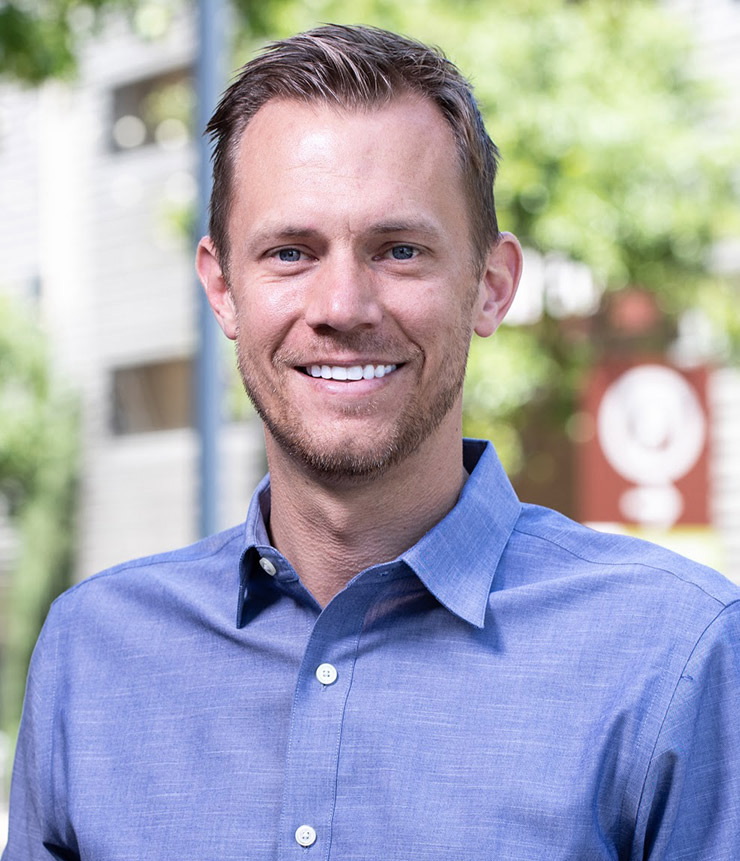
Chris Clark

Chris Clark

Strategic Advisor and Board Member

Founding Chief Strategy Officer, Chris Clark is passionate about helping leaders in higher education realize the transformative power and utility of virtual care to address a range of challenges experienced in our world today. Chris’ experience and leadership in strategy and revenue generation enabled TimelyCare to scale from a niche startup to the gold standard in virtual care for higher education. Now as colleges and university leaders seek solutions that improve student well-being, engagement and retention, they turn to TimelyCare more than anyone else.

Prior to TimelyCare, Chris was a leader in Amgen’s Global Commercial Learning and Performance organization. In this role, he was instrumental in building a new internal consultative function supporting the sales organization. Previous to this role, Chris led a sales team for Amgen in the Dallas/Fort Worth area.

Chris began his career in the pharmaceutical industry in 2002, working for Merck for 13 years, winning multiple national awards in sales and sales management. His experience at Merck, including sales, training, people management, account management and strategy development, was invaluable in founding and scaling TimelyCare.

LinkedIn

Related Articles

Students walking on campus during fall
  • February 26, 2026
  • Jen Loop
  • Higher Education

Why Boards Need Well-Being Data

OverviewCollege and university boards are evaluating student well-being through a new lens. While student health remains the top priority, trustees must also assess financial sustainability, risk, and long-term institutional value. This blog explains why well-being data is essential for board...
A group of students gathered together outside on a college campus
  • February 13, 2026
  • Seli Fakorzi
  • Higher Education

When Care Works, Students Stay

OverviewStudent retention is no longer just an enrollment strategy. It is a care strategy. This blog explores how timely, coordinated, evidence-based mental health support directly stabilizes students, strengthens institutional resilience, and improves measurable retention outcomes. When care works consistently and...
Woman working at a computer
  • January 27, 2026
  • Becky Laman
  • Higher Education

The Hidden Costs of Unproven Well-Being Strategies in Higher Education

OverviewInvestments in student well-being are essential, but not all care strategies deliver results. When care lacks evidence, continuity, or cultural relevance, hidden costs can arise across campus. Those costs rarely appear in a single budget line. Instead, they surface in...
TimelyCare
Facebook Twitter Linkedin Instagram

SOC 2, URAC

TimelyMD is an Educational Partner of NASPA

TimelyCare is an Educational Partner of NASPA

The Product

  • What We Do
  • Who We Serve
  • Our Blog
  • Testimonials
  • TimelyCare Login
  • What We Do
  • Who We Serve
  • Our Blog
  • Testimonials
  • TimelyCare Login

Company

  • About Us
  • People
  • Provider Network
  • News & Media
  • Careers
  • Join Our Care Team
  • Partners
  • Resources
  • About Us
  • People
  • Provider Network
  • News & Media
  • Careers
  • Join Our Care Team
  • Partners
  • Resources

Help

  • Support
  • TimelyCare Login
  • Support
  • TimelyCare Login

Get Started

  • Let’s Talk
  • Request a Demo
  • Let’s Talk
  • Request a Demo

Copyright © 2026
Timely Telehealth, LLC
833.484.6359

Terms & Conditions
Privacy Policy
Security
Cookie Policy

Do Not Sell My Personal Information
Contact Us

TimelyCare
Manage your privacy

We value your privacy.  We use some essential cookies that are necessary to make this service work.  We also use cookies and other technologies to enhance user experience and analyze performance on our website, and we may also share information about your use of our site with our advertising partners.  You can exercise your choices regarding these technologies using the buttons below.  For more information, please see our Privacy Policy and Cookie Policy.

Necessary Always active
Strictly necessary cookies are necessary for the website to function and cannot be switched off in our systems. They are usually only set in response to actions made by you which amount to a request for services, such as setting your privacy preferences, logging in or filling in forms. You can set your browser to block or alert you about these cookies, but some parts of the site will not then work.
Functional
Functionality Cookies allow websites to remember the user’s site preferences and choices they make on the site including username, region, and language. This allows the website to provide personalized features like local news stories and weather if you share your location. They are anonymous and don’t track browsing activity across other websites. Similar to strictly necessary cookies, functionality cookies are used to provide services you request.
Performance
Performance Cookies allow us to count visits and traffic sources so we can measure and improve the performance of our site. They help us to know which pages are the most and least popular and see how visitors move around the site. If you do not allow these cookies we will not know when you have visited our site, and will not be able to monitor its performance. The technical storage or access that is used exclusively for anonymous statistical purposes. Without a subpoena, voluntary compliance on the part of your Internet Service Provider, or additional records from a third party, information stored or retrieved for this purpose alone cannot usually be used to identify you.
Marketing
Marketing Cookies may be set through our site by our advertising partners. They may be used by those companies to build a profile of your interests and show you relevant adverts on other sites. They do not store directly personal information, but are based on uniquely identifying your browser and internet device. If you do not allow these cookies, you will experience less targeted advertising.
  • Manage options
  • Manage services
  • Manage {vendor_count} vendors
  • Read more about these purposes
Manage options
  • {title}
  • {title}
  • {title}